

WHAT LUGGAGE AND CLOTHING SHOULD YOU PACK FOR BRAZIL?
Brazil is a vast country with very different ecosystems, requiring suitable clothing and luggage depending on the regions you visit during your trip.
In addition, depending on the time of year you visit a particular region of Brazil, the recommended clothing may vary according to the climate. Here are a few tips to help you choose the right outfits as well as the most suitable types of luggage for your trip to Brazil. They are based on the experience we have gained during our regular travels throughout the country to test and update our tours, as well as feedback from travelers who use our services.
With this practical information, you can determine what will be most useful and convenient according to your destinations and their environmental and climatic conditions, the type of transportation you will use, and the activities planned during your trip to Brazil. This will help you choose the right luggage and clothing for your Brazilian vacation.
Discover all our practical information for traveling to Brazil
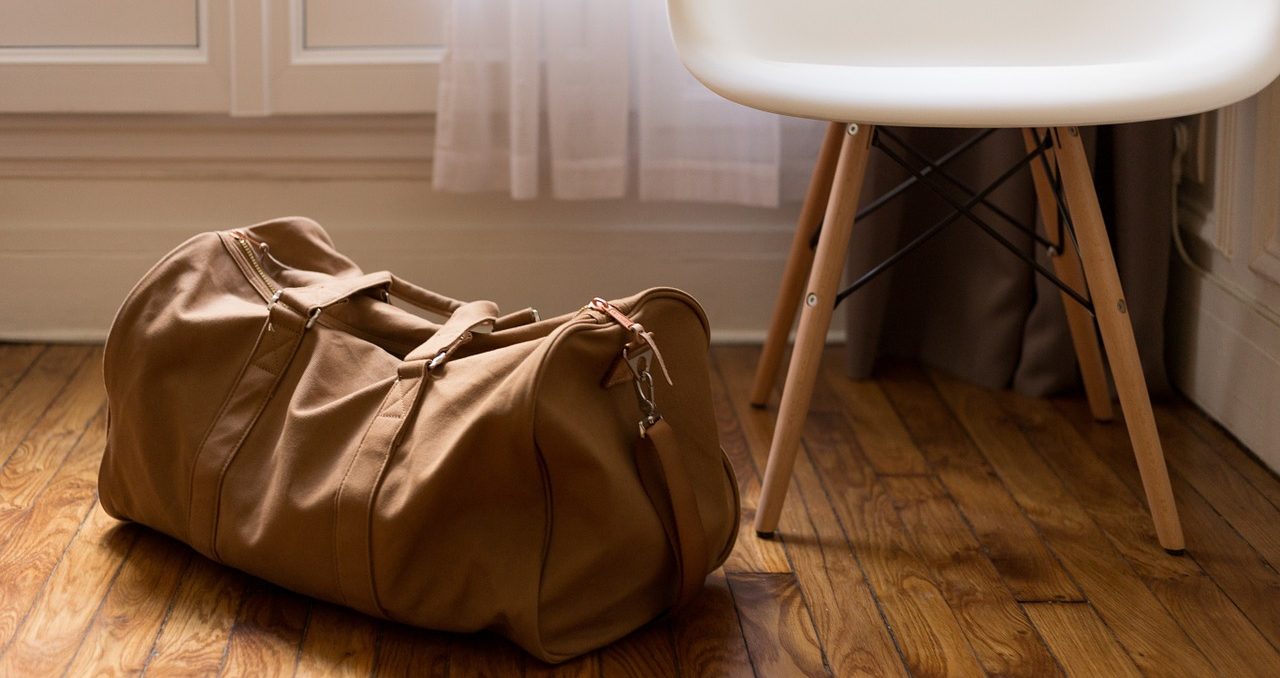
What luggage should you choose for a trip to Brazil?
International and domestic airline baggage restrictions
Be sure to check both the weight and size restrictions for your luggage before taking a flight.
Some types of equipment, particularly sports equipment, may incur additional charges if they exceed the permitted dimensions, so make sure to check with your airline in advance.
Until 2018, the standard allowance in Brazil for domestic flights with Brazilian airlines was one checked bag weighing up to 23 kg per traveler. Since 2018, domestic flights in Brazil have generally been sold by default without checked baggage and include only one carry-on bag weighing less than 8 kg (with maximum dimensions of 55 x 35 x 25 cm). One additional personal item, such as a handbag or laptop bag, is also generally permitted, provided it does not exceed 20 x 45 x 35 cm (or a total of 100 cm) and 3 kg.
The international airlines most commonly used to travel to Brazil from French-speaking European countries include the Portuguese airline TAP, which serves many major Brazilian cities from Lisbon, as well as Air France, KLM and LATAM from Paris or Amsterdam. These airlines offer different fare options, ranging from travel without checked baggage to allowances of up to three standard bags weighing 23 kg each. They also provide transportation for oversized items, a particularly useful service for kitesurfers and other water sports enthusiasts wishing to travel to Brazil with their own equipment.
You can visit the airline websites below to learn more about their baggage and equipment transportation policies.
TAP: https://www.flytap.com/fr-sn/informations/bagage/bagage-en-soute
Air France: https://www.airfrance.fr/FR/fr/common/guidevoyageur/pratique/bagages-soute-airfrance.htm
KLM: https://www.klm.com/travel/lr_fr/prepare_for_travel/baggage/baggage_allowance/index.htm
LATAM Airlines: https://www.latamairlines.com/fr/fr/experience/preparez-votre-voyage/bagages/soute
What luggage should you choose depending on your destinations in Brazil?
Whether you are traveling through the major cities of southern Brazil, exploring the beaches of the Nordeste by buggy, or setting off on an expedition into the Amazon rainforest, your needs and travel conditions will be very different. Here are a few tips to help you choose the most suitable luggage for each region of Brazil.
The best choice will depend on the style of your trip and what you plan to carry. If you are unsure, please feel free to contact us. We will be happy to help you choose the most suitable equipment for your journey.
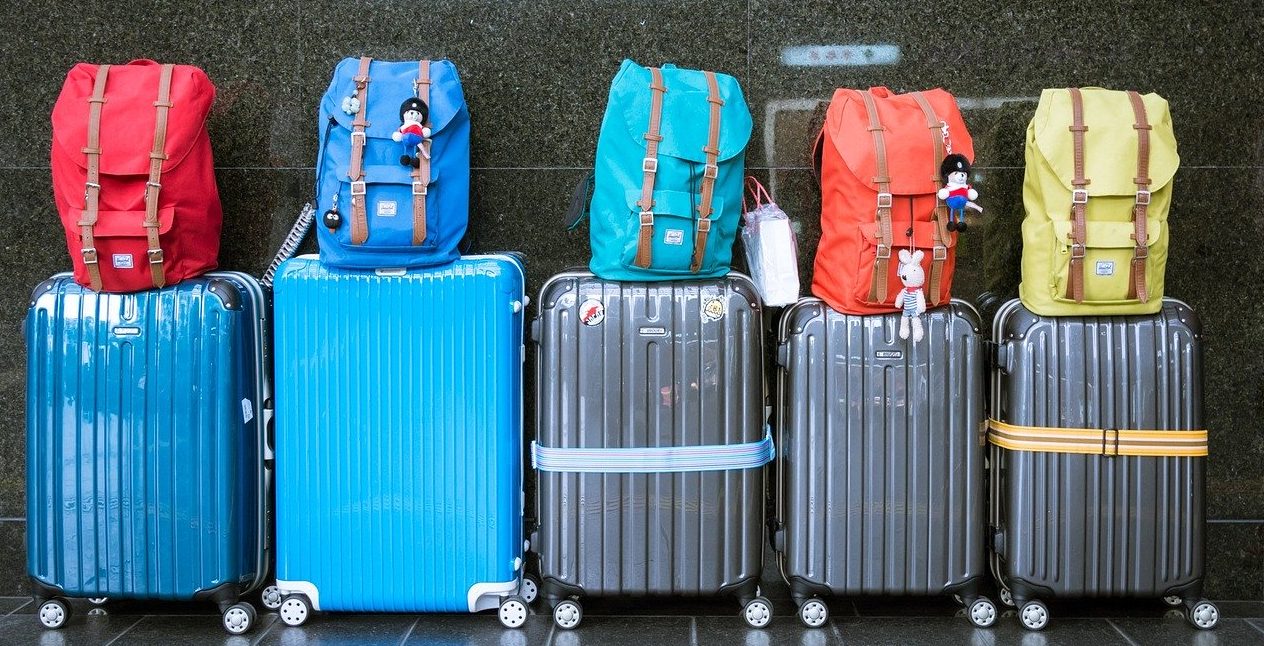
The suitcase, ideal luggage for urban destinations in Brazil
For a stay in an urban destination such as Rio de Janeiro, Brasília or São Paulo, hard-shell suitcases are naturally safer and more practical, especially when carrying fragile items or liquids. There are many different models available, with a wide variety of materials (aluminum, polycarbonate, ABS), sizes, shapes and accessories. Choose a suitcase with good-quality wheels and a sturdy retractable handle. To help you select the best suitcase for your trip, you can also consult luggage review websites. If your flight passes through the United States or Canada, it is best to use a suitcase equipped with a TSA-approved padlock or lock to prevent customs authorities from damaging the locking system. This allows customs officers in these countries to open your luggage for inspection without damaging it.
On the other hand, suitcases can sometimes be bulkier than other types of luggage. They can also be difficult to move over longer walking distances outside airports because sidewalks and streets are often uneven or paved with cobblestones. In Brazil, each building owner is generally responsible for the sidewalk in front of their property, meaning the level and surface may change considerably from one building to the next along the same street. To reduce this inconvenience, choose suitcases with two large roller-style wheels rather than four smaller plastic wheels, which tend to be more fragile.
Suitcases with glossy, painted or varnished finishes do not withstand scratches and dirt particularly well. Consider using a protective cover or having your suitcase wrapped in plastic at a specialized airport stand before checking it in to help prevent damage.
To complement your main luggage, a small backpack or simple shoulder bag will be an ideal companion for carrying the few items you need on your daily excursions. Choose something discreet, with secure openings or flaps, to avoid unpleasant surprises and attract as little attention as possible. It will also make it easy to carry your essentials and keep a bottle of water with you, as Brazil is a tropical country and staying well hydrated is very important.
Another good compromise is a reinforced fabric suitcase. Usually designed with some more rigid sections, these suitcases protect their contents effectively from impacts while being less susceptible to scratches. They are also often divided into compartments, making it easier to organize your belongings. Finally, they are more forgiving of slight deformation caused by an unexpected addition to your luggage, such as that charming indigenous artifact you happened to discover deep inside a market in Manaus.
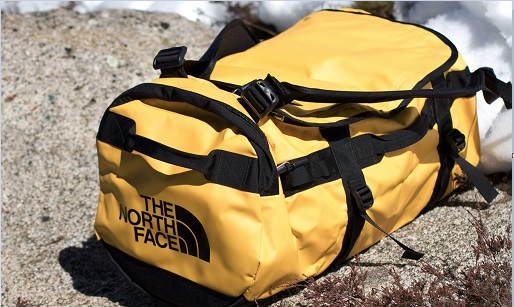
The most suitable luggage for nature destinations in Brazil
If your trip to Brazil includes time in nature, the first question to ask yourself is whether you will need to carry your own luggage over long distances.
The backpack
If the answer is yes, for example if you are planning a trek or hike that requires carrying all your belongings with you, then the most suitable option will be a backpack adapted to your body shape for maximum comfort.
The choice is enormous, with many sizes, shapes, organization systems and closure systems available. There are specialized travel models featuring a detachable section, usually the top lid or an exterior pocket. This gives you a second, smaller bag that is very convenient for exploring around your accommodation while still allowing you to carry only one main piece of luggage when changing locations. However, these models are often slightly heavier than backpacks designed primarily for hiking.
Another option is to buy an ultra-compressible bag made from lightweight nylon fabric. It takes up almost no space when packed into its small pouch and means you will not need to use your main backpack for short daily outings. It can also serve as a small carry-on bag during flights.
The duffel bag
If you do not have any particular carrying requirements but are traveling through natural environments, our experience suggests that the ideal solution is to travel with large waterproof heavy-duty duffel bags. They are also known as trekking bags or Base Camp Duffel bags, after the original model developed by the famous outdoor brand The North Face. Today, virtually every hiking and outdoor equipment brand, including Patagonia, Thulé and Osprey, offers this type of bag. Decathlon also sells affordable and very durable versions, which are ideal for occasional use.
They were originally designed to carry additional equipment on major adventure expeditions. Virtually indestructible, easy to handle and available in a wide range of sizes, they are not affected by scratches or dirt and are particularly practical for transfers by buggy, 4×4 vehicle or small boat in challenging environments where sand, salt and humidity are ever-present. Their thick PVC-coated fabric and reinforced zippers provide excellent protection against the elements and repeated rough handling. Larger models are often equipped with shoulder straps, allowing them to be carried comfortably on your back over moderate distances when necessary.
Duffel bags are therefore particularly recommended for some of the trips we offer in Brazil, such as a buggy road trip along the beaches of the Nordeste or a cruise or lodge stay in the Amazon.
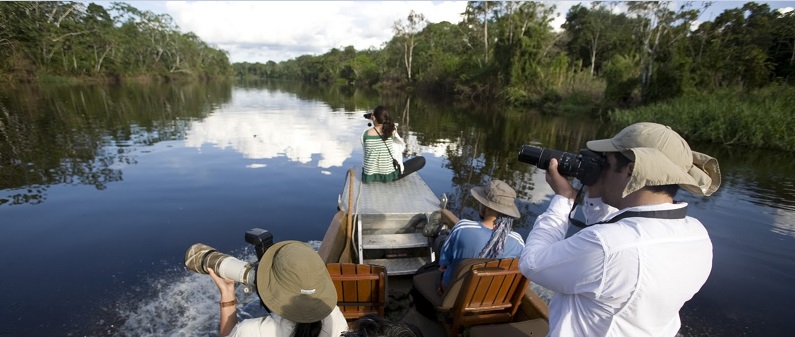
What clothing should you pack for a trip to Brazil?
Brazil is an immense country, so temperatures and suitable clothing vary considerably from one region to another.
During the European winter months, there is generally no problem: temperatures are warm throughout Brazil. In the south of the country, however, occasional summer thunderstorms can occur, so a rain jacket or poncho may come in handy. Otherwise, no particular precautions are required.
However, during the months of June through August, temperatures can occasionally fall to between 10 and 15°C (50 to 59°F) in southern Brazil (Rio, Iguaçu and the Pantanal), and even as far north as Salvador, where temperatures of around 18°C (64°F) with rain are possible, while the Nordeste or Amazon may still experience temperatures of 30°C (86°F) or more. If you are traveling in these regions at this time of year, a light sweater or cardigan and a lightweight rain jacket (such as a Paclite-style jacket) will prepare you for any situation.
If you are not traveling in southern Brazil during this period, lightweight clothing is ideal: shorts, Bermuda shorts, T-shirts or short-sleeved shirts. Do not forget a hat (or cap) and sunglasses. Lightweight long clothing can be useful in the evening if you are staying in humid areas or near rivers, where mosquitoes may be present at that time of day. A light sweater in your carry-on for evenings on the beach and airplane journeys will also be useful, as air conditioning on planes is not always well regulated and it can become quite cold, particularly in the middle of the cabin.
Special clothing for specific destinations in Brazil
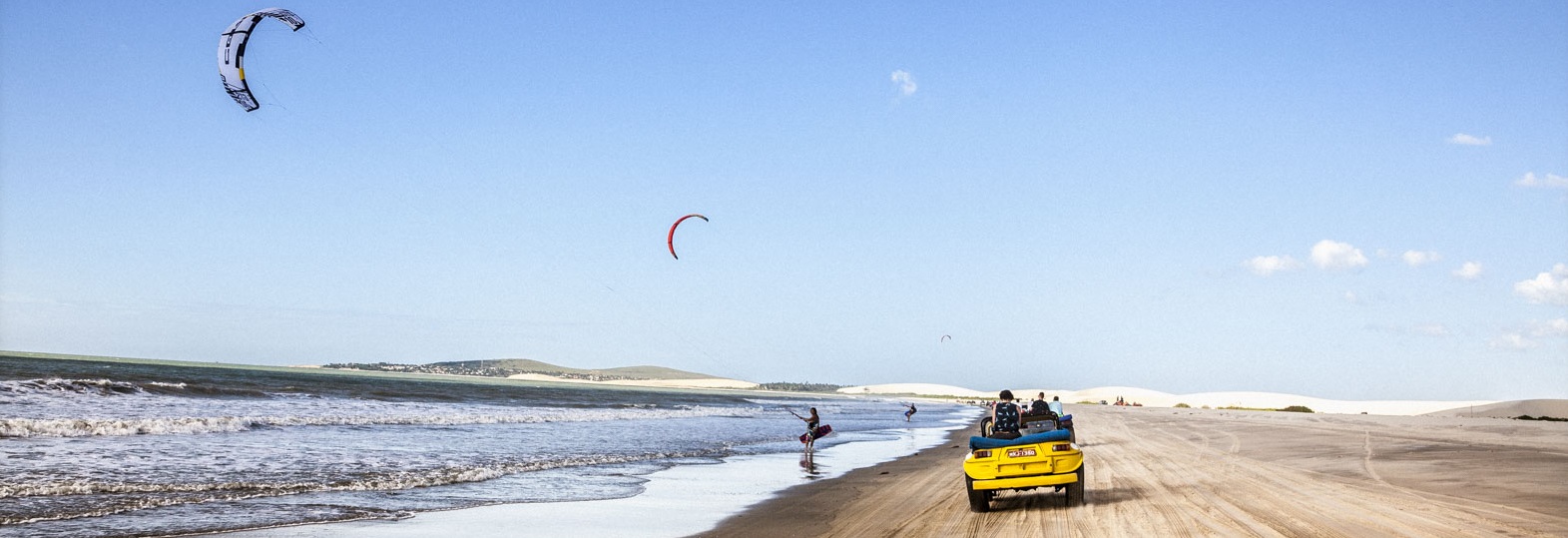
Special clothing for a trip to Brazil’s Nordeste
For stays in the Nordeste, you will of course want to pack your collection of swimsuits. A cap or hat and a good pair of sunglasses are also essential for protection from the intense sunshine.
Long-sleeved UV-protection Lycra shirts are very useful for protecting yourself from the powerful midday sun. They are particularly suitable for buggy tours along the beaches or excursions and treks in the Lençois desert, where you may be exposed to the sun for long periods. This is especially important for children and people with very fair or sun-sensitive skin.
Lightweight pants and a light-colored long-sleeved top will be useful in the early evening to protect against insects that may occasionally appear in humid areas such as riverbanks. They can also be useful during breezy evenings by the ocean, which may feel slightly cool after the heat of the day. Between February and the end of May, it is the rainy season. Rain showers are usually brief and intense, generally occurring early in the morning or after nightfall. A poncho or umbrella can therefore be useful. A rain jacket is less suitable because of the heat, unless you are traveling in an open vehicle such as a buggy. The best option, however, is often to do what the locals do and simply wait somewhere sheltered until the storm passes.
For footwear, flip-flops are a must and offer the perfect opportunity to buy a pair of iconic Havaianas or Ipanema sandals, Brazilian brands that have become symbols of beaches around the world. Complete your footwear with a pair of lightweight sneakers for longer walks away from the sand.
For the specific case of the Lençois desert, leave the hiking boots behind. It is best to walk barefoot or possibly wear sports sandals. Avoid closed shoes, which quickly fill with sand and, through constant friction, can easily cause blisters.
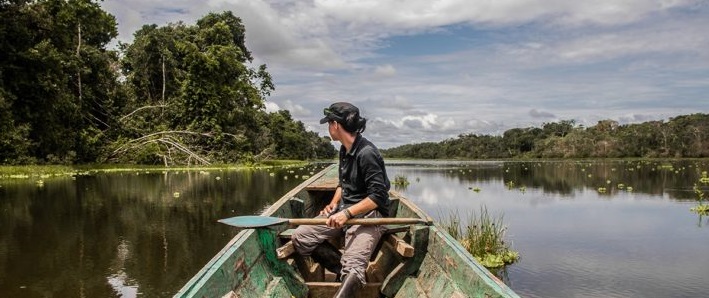
Special clothing for a stay in the Amazon or Pantanal
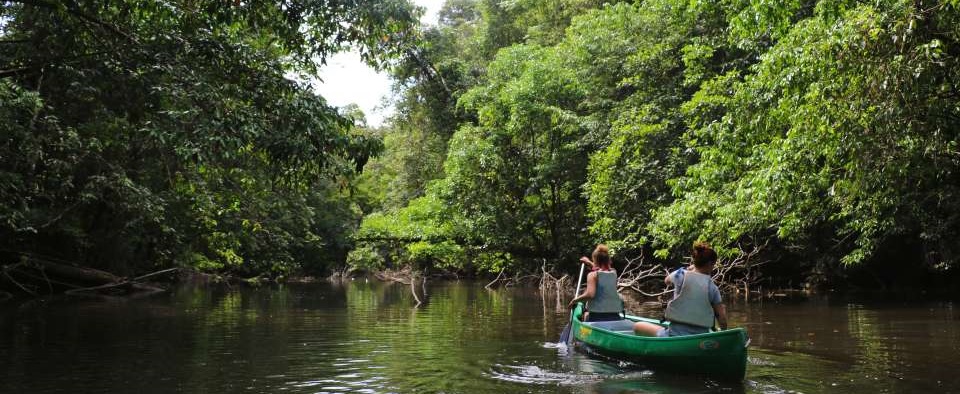
For a trip that includes time in the Amazon, such as a stay in the Anavilhanas region or on Marajo Island, pack breathable clothing that covers your skin for jungle excursions. It will protect you in the forest from potentially irritating plants as well as insects, mud, dust and other dirt. Long-sleeved shirts are particularly suitable because of their versatility: you can roll the sleeves up or down, open or close a few buttons, raise the collar and adjust them to achieve the best balance between protection and ventilation.
A hat is very useful for protecting yourself from plant debris that may fall from the treetops, as well as from the strong sun, small branches and other vegetation at head height. Do not forget a rain jacket, as rainfall is generally brief but frequent throughout the year. Choose a model that is as compact and breathable as possible. It can also serve as a useful windbreaker during early-morning motorboat excursions, when the air can feel surprisingly cool.
For footwear during a short stay, choose breathable sneakers made from synthetic materials, together with thin synthetic socks such as lightweight hiking or adventure-racing socks that are comfortable and highly breathable. This combination allows your feet to breathe while helping your shoes dry quickly if they get wet during an excursion or when getting in and out of a boat. It will also help prevent the discomfort of excessive moisture and possible skin problems.
Brazilian flip-flops are perfect for wearing around your lodge and allowing your feet to breathe, while also giving you an extra souvenir from your trip. For a longer stay, for example as part of research, professional or humanitarian work, in a very humid environment during the rainy season, you may consider wearing rubber boots like the locals, provided you do not have long distances to walk while carrying heavy loads. Local models are practical and cost only a few dollars per pair.
In the specific cases of the Pantanal and Marajó, you may have the opportunity to go horseback riding or even ride buffalo. In these situations, sturdier and especially close-fitting pants are important to avoid chafing while riding. The classic cowboy jeans have proven their worth for this purpose.
In all cases, people who are particularly sensitive to insect bites can wash their clothing before traveling with permethrin-based laundry treatment. There are also sprays that can be applied directly to clothing. This repellent treatment can remain effective for up to two months or four to five washes. These products can be found in travel-oriented outdoor stores such as Le Vieux Campeur, online or ordered from a local pharmacy. “Insect Écran” is one well-known brand.
Between July and September, bring warmer clothing for evenings and dawn excursions in the Pantanal, where temperatures can fall below 15°C (59°F).
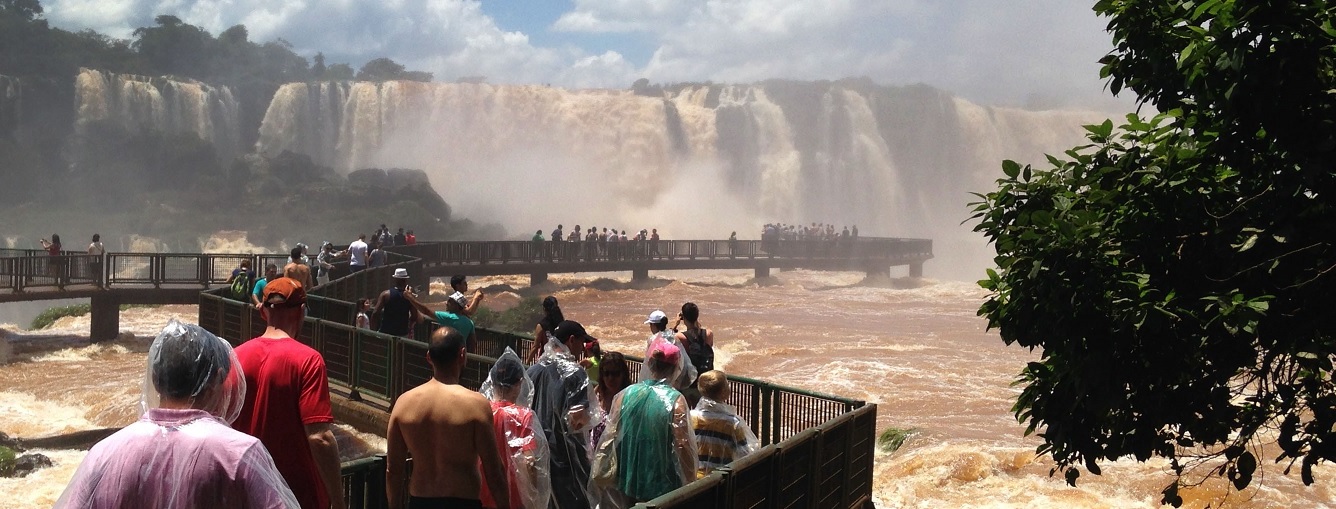
Special clothing for a trip to Iguaçu
If you plan to visit Iguaçu Falls, remember to bring your rain jacket, as the lower walkways on the Argentine side are regularly soaked by the spray from the waterfalls. Between June and September, evening temperatures can be quite cool and may exceptionally fall to around 10°C (50°F) at night, so remember to pack a sweater.
Summary of clothing and essential items to pack for a trip to Brazil
- A compact rain jacket (for stays between June and August in southern Brazil, time in the Amazon or boat excursions)
- A lightweight sweater (for the Brazilian “winter,” breezy evenings and air conditioning on domestic flights)
- A hat or cap (for sun protection and jungle excursions)
- A swimsuit (for beach destinations and hotel swimming pools)
- Lightweight, quick-drying sneakers (for city sightseeing, nature walks and the Amazon)
- Sunglasses (everywhere)
- Good sunscreen (even during the Brazilian “winter”)
- A small flashlight