


Formula 1 in Brazil
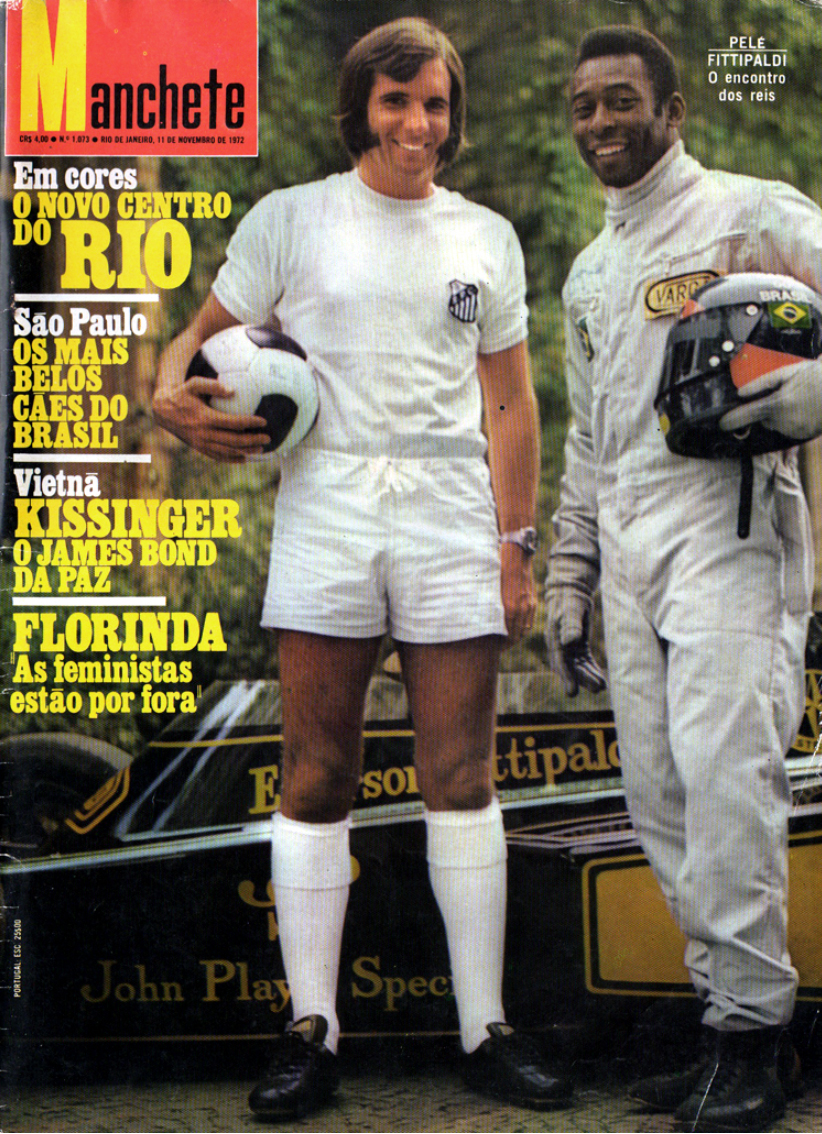
“Fórmula Um no Brasil”
Brazil is a country that comes together around the king of motorsports.
While soccer remains unquestionably the most popular sport in Brazil, Formula 1 holds a special place in the hearts of passionate fans who turn out in huge numbers at racetracks to cheer on their heroes. This passion has endured for more than 45 years, ever since a young Paulista with prominent sideburns and a piercing gaze burst onto the international scene.
“Sport” tours in Brazil
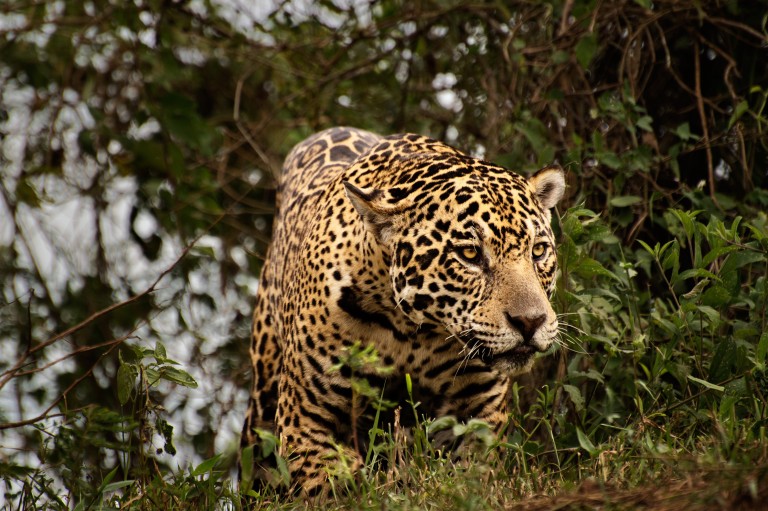
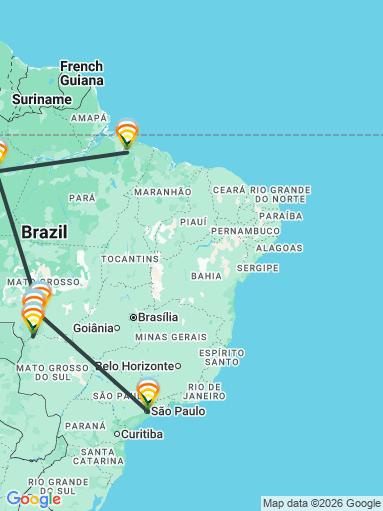
Brazil’s Wild Heart: Jaguars & the Amazon
11-Day Tour: Encountering Brazil’s Iconic Flora and Fauna
From
5140
€
Formula 1 in Brazil
Brazil has always enjoyed a close and passionate relationship with motorsports. The sport began developing at the end of World War II, particularly with the opening of the brand-new Interlagos racetrack in southern São Paulo (“Between the Lakes,” as it is indeed located between two bodies of water), and grew significantly during the 1960s as the automobile market expanded.
Although Brazil was not yet considered an “emerging” country, it nevertheless wanted to take part in the global economic boom, and car sales soared, particularly those of Volkswagen and DKW, even though these “affordable” models could cost a low-paid employee as much as 25 months of salary! This boom naturally went hand in hand with motor racing, although competitions remained largely confined to Brazil, with local drivers battling it out behind the wheel of Volkswagen Beetles, Dauphines and Renault Alpines—yes, really!—built under license in the country. Formula 1’s expansion beyond the borders of old Europe in the early 1970s would completely change the landscape in Brazil.
A new king of Formula One in Brazil
Son of famous radio sports journalist Wilson Fittipaldi Sr., Emerson Fittipaldi was not the first Brazilian to reach motorsport’s premier class—Chico Landi had preceded him in the 1950s, although without achieving major results—but he was the man who would propel his country onto the international stage thanks to his meteoric rise. Born in São Paulo, “Emmo” entered Formula 1 at a very young age in 1970 and, within just two seasons, became the youngest World Champion in history.
For the sports-loving Brazilian public, this new hero followed in Pelé’s footsteps as a global representative of the country. The difference was that Pelé embodied soccer, the ultimate popular sport, while Fittipaldi placed Brazil at a level it had never before reached in such a technologically advanced discipline, perfectly reflecting the spirit of the times.
Brazilian motorsport authorities immediately understood the opportunity: thanks to this sudden glory, hosting a Formula 1 Grand Prix had become possible! Interlagos, the country’s only circuit meeting international standards, was the obvious choice, and from 1973 onward Brazilian motorsport fans could cheer on their hero at the racetrack on the outskirts of São Paulo. The Paulista driver’s victories on “his” circuit sparked exuberant celebrations among a public grateful to the man who was projecting a positive image of Brazil around the world, far removed from the stereotypes of favelas and poverty.
At that first official Grand Prix, a 13-year-old boy was introduced to King Emerson by his father, wealthy São Paulo businessman Milton da Silva. Mr. da Silva was immensely proud to introduce the champion to his son, who had just won his first kart race on the small track adjoining the circuit. Smiling, Emerson briefly spoke with the shy young boy, whose first name was Ayrton. A few years later, Ayrton da Silva, now known as Senna—he had adopted his mother’s surname for racing—would enter Formula 1 himself, under the guidance of his mentor Fittipaldi, and become a living legend for an entire nation.
Ayrton Senna, the immortal F1 legend
More than Fittipaldi, Ayrton Senna became THE ultimate champion. His achievements, extraordinary mastery behind the wheel and exceptional charisma inspired a level of passion among fans that sometimes bordered on hysteria. Like Fittipaldi, he won twice at Interlagos and, as with Fittipaldi, those victories triggered scenes of collective euphoria rarely matched at any other racetrack. Senna had become almost a god to his Brazilian fans, and his public appearances could sometimes become difficult to manage. Yet he remained deeply attached to his country and, once the Formula 1 season was over, he would return during the Southern Hemisphere summer to recharge at his magnificent property in Angra dos Reis, on Ilha Grande Bay.
Following in Fittipaldi’s footsteps, Senna had shown that Brazil could rightfully stand among the world’s winners, and his goal was to encourage young people, especially the most disadvantaged, to believe in themselves and succeed, just as he himself had believed in his abilities against all odds. Together with his sister Viviane, he had established a foundation with this purpose, but on May 1, 1994, at Imola, tragedy struck the world of motorsports—and above all, the Brazilian people.
Brazil’s beloved champion was buried at Morumbi Cemetery in São Paulo with the honors due to a national hero, and the Brazilian government declared an exceptional three days of mourning. The magician was gone forever, and nothing would ever be the same again.

Nelson Piquet, the unpopular champion of Brazilian Formula One
Some passionate fans then called for Interlagos to be renamed after Senna. But this would have overlooked José Carlos Pace, whose name had already adorned the circuit since 1985. “Carlos” Pace had been expected to succeed Fittipaldi during the second half of the 1970s. An exceptionally gifted driver, he earned his first—and only—Formula 1 victory at the famous Interlagos circuit in 1975. His death in a helicopter crash in early 1977 tragically brought this promising story to an end, and Brazilians had to wait until the beginning of the following decade to see a successor emerge as Fittipaldi’s career drew to a close.
Unlike Fittipaldi and Pace, Nelson Piquet was a “Carioca,” a native of Rio de Janeiro. The timing could hardly have been better: the aging Interlagos circuit had recently been abandoned in favor of the modern Jacarepaguá circuit, built a few miles west of Rio. Piquet quickly began winning Grands Prix and became World Champion three times during the 1980s. Yet his popularity never came close to that of his illustrious predecessors.
His unpredictable personality and sometimes carefree attitude puzzled fans, who responded by granting him respect rather than genuine affection, unlike the devotion they had shown Emmo and Carlos. The explosive arrival of Ayrton Senna on the Formula 1 scene in the middle of the decade focused renewed enthusiasm on the new hero, at the expense of Piquet, who developed a lasting bitterness as a result.
It was no secret that the two Brazilian champions could not stand each other, and unfortunately for Piquet, the brilliance of the Paulista star increasingly overshadowed his Carioca rival. In an ironic twist of history, the Jacarepaguá circuit was abandoned at the end of the 1980s—it was eventually demolished in 2012 to make way for future Olympic facilities, quite a symbol!—and Formula 1 returned to historic Interlagos, which had undergone major renovations in the meantime.
Nevertheless, Piquet was undoubtedly a great champion, retiring in 1991. Senna’s death in 1994 then left an enormous void in the hearts of Brazilian fans: for nearly 25 years, they had enjoyed the privilege of cheering on some of Formula 1’s greatest drivers. The future no longer seemed to promise such extraordinary champions.
A difficult succession
This may help explain why Rubens Barrichello, who entered Formula 1 in 1993, never fully lived up to the expectations of an entire nation: he was expected to take up the mantle and embody, in turn, the greatness of a country proud of its champions. The likable driver from Curitiba simply could not carry the weight of such a sacred mission. He was an excellent competitor, as was his fellow Brazilian Felipe Massa—who came within one corner and one straight of winning the World Championship in 2008. While both naturally enjoyed the support of Brazilian fans when racing “at home,” they never received the extraordinary adulation reserved for legendary heroes such as Ayrton Senna, Emerson Fittipaldi and, to a lesser extent, Nelson Piquet.
Massa’s announced retirement at the end of 2016 gave Brazilian fans reason to fear the worst: in 2017, for the first time in 47 years, there would be no leading Brazilian driver on the Grand Prix starting grid, with the country’s only presence represented by young Felipe Nasr, who still had everything to prove in an unfortunately uncompetitive team. Was it the end of an era? Perhaps. But it was equally possible to believe that a country that had produced so many exceptional champions would not stop there.