


Stay in Salvador de Bahia
5 days / 4 nights
Customizable experience
This stop can be included in a tailor-made tour.
Price upon request.
The stops are presented as inspiration to help enrich and personalize your tour. They are included as part of a complete itinerary, with the overall price calculated for the entire trip.
What will make you dream:
- The Pelourinho district with its Baroque churches and colonial houses
- The handicrafts of the Mercado Modelo
- The fascinating and mystical Church of Bonfim

The organization by the agency Brazil Selection was top-notch. Everything went exactly as planned. Drivers were punctual. The private excursions were fantastic. We felt like VIPs.
All the hotels were ideally located. We received a very warm welcome everywhere. There was a bit of noise at the pousada in Jericoacoara (noise from the street in the evening and from breakfast preparation in the morning).

Thank you to Aude, Fernando, and the Brazil Selection team for this wonderful trip.

A huge thank you to Jonathan for his efficiency, availability, and the flawless organization of all the logistics. He understood our expectations, took all our constraints into account, and designed a completely tailor-made trip that perfectly suited us.
Going to Brazil without such solid organization now seems unthinkable! Thank you to Jonathan and the entire Brazil Selection team for contributing so much to the success of this magnificent trip.



They organized our nine-day tour of the “Route of Emotions.”
It was truly magnificent, and the name of this route is well-deserved.
The organization was impeccable, and the excursions offered far exceeded our expectations. Everything was perfectly planned.
My only complaint was the hotel in Atins, which was a bit too rustic and clearly needs some renovations.
Thank you to Jonathan for the flawless organization, and thank you to Fernando for his quick response in handling an urgent issue at the end of our trip.


Our round trip included visits to Rio, Iguaçu, the Amazon, Atins, Jericoacoara, Salvador, and back to Rio – each destination so different yet so special in its own way. Everything was perfectly organised, and it all ran smoothly thanks to their planning and guidance.
A special thank you goes to Riviane, who was always just a whatsapp message away. Her tips, reassurances, and friendly check-ins made such a difference throughout the trip – we felt supported every step of the way.
They turned what could have been a daunting trip to organise (keeping in mind how large Brazil is) into an unforgettable adventure.


We are very satisfied with the travel arrangements Brazil Selection made for us. You cater to our every specific sightseeing needs, which might not be the run-of-the-mill choices for most tourists. The transport arrangements at every iuncture were absolutely hassle-free. Credit must also go to the drivers, all of whom were polite, amiable, and eager to help, even though some of them did not speak English. The hotels chosen ranged from very good to excellent. We felt that your liaison officer, Rivane, did very well in coordinating with the local agents in every region we set foot on. She was as responsible and devoted as could be expected. When problems arose, she was quick to sort things out for us. For instance, when we missed a connecting flight due to a flight delay, she responded quickly to revise the pick-up transport for us at the other end. We always appreciate it when a travel agent attaches so much importance to the well being of her clients. Salute to Brazil Selection and Rivane!



Information
Stay in Salvador de Bahia: Discover Brazil’s “Black Rome”!
Enjoy a vacation combining history, Afro-Brazilian culture and relaxation in Salvador de Bahia
On the coastline of the State of Bahia, at the entrance to the immense and magnificent “Bay of All Saints” (Baía de Todos os Santos), Salvador de Bahia offers a refreshing journey into an authentic and welcoming Brazil. The country’s first capital, Salvador has a rich and complex history, and you will have the opportunity to explore an entire district containing nearly 800 buildings dating from the Renaissance through the 18th century, remarkably well preserved.
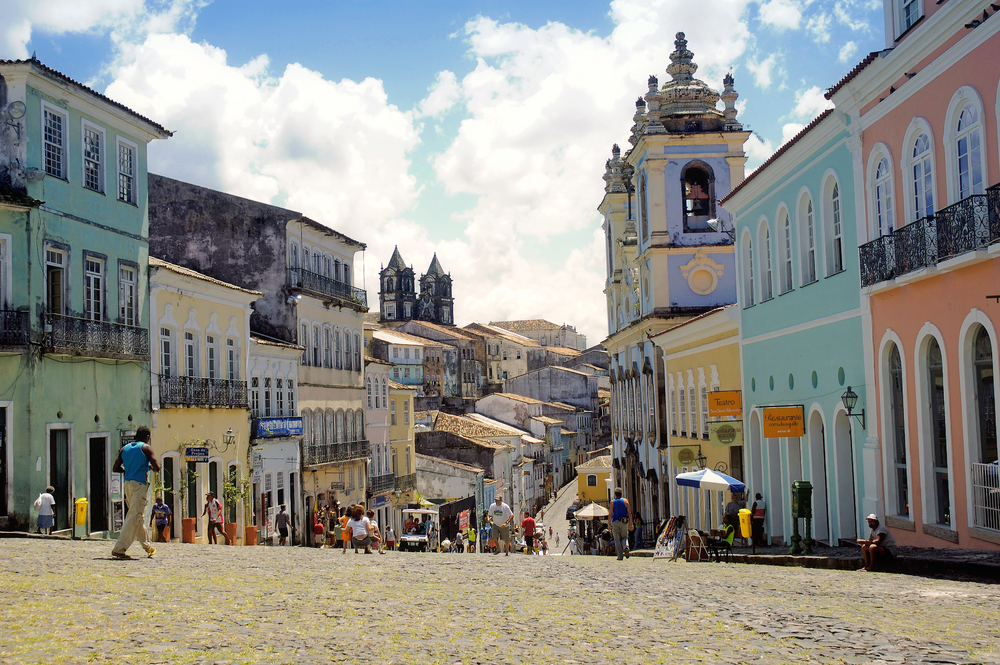
You will discover this exceptional heritage while visiting the historic center and the Pelourinho district (meaning “pillory,” in reference to the one once located in the center of the main square to punish enslaved people). This neighborhood of colorful historic houses and cobblestone streets has been restored and is now one of the best-preserved colonial heritage sites in Brazil. As you explore it in the best possible conditions with a private guide, you will discover an important part of the history of Brazil’s colonization by the Portuguese.
Salvador de Bahia is therefore a city of remarkable heritage, but you will also fall under the spell of its 31 miles of coastline, with numerous beaches washed by tropical waters. It is also an emblematic destination for understanding Brazil’s cultural diversity, with 82% of its population identifying as Afro-descendant (source: IBGE 2014).
Nicknamed the “Black Rome,” Salvador is considered the true cradle of Afro-Brazilian culture and proudly embraces its omnipresent African roots. Their influence can be seen particularly during Carnival and in capoeira performances, an art combining combat, dance and spirituality. It is also deeply present in Candomblé, a syncretic religion widely practiced in the region that combines Christianity and African polytheistic traditions. With its 365 churches, religion has deeply influenced the city, and spirituality can be felt everywhere.
Above all, Salvador is a destination that will appeal to travelers interested in Brazilian culture and its many different facets. A stay in Salvador de Bahia offers a unique opportunity to discover the soul of Brazilian culture. By the time you leave, you will have gained a deeper understanding of how contemporary Brazilian society was shaped, while enjoying the warm atmosphere that is so characteristic of Bahia’s capital. There is also plenty to delight the senses, from beautiful local handicrafts to delicious cuisine combining African and Indigenous influences and featuring plenty of seafood. Without a doubt, it is among the finest regional cuisines in Brazil!
The itinerary
Program
Day 1
Salvador de Bahia In
Arrival at Salvador de Bahia Airport.
Your driver will be waiting for you in the arrivals hall and will take you to your hotel, located in Pelourinho, the tourist district in Salvador’s historic center.
Upon arrival at the hotel, check-in is available from 2:00 p.m. You can then settle into your room.
Overnight at the hotel.

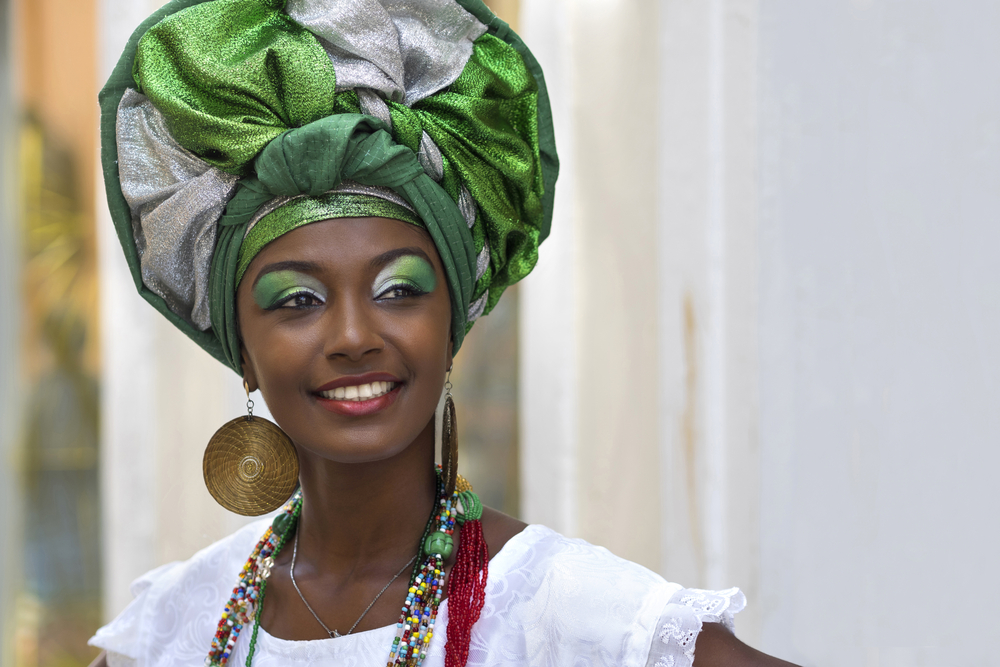
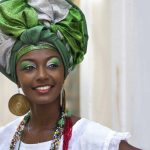
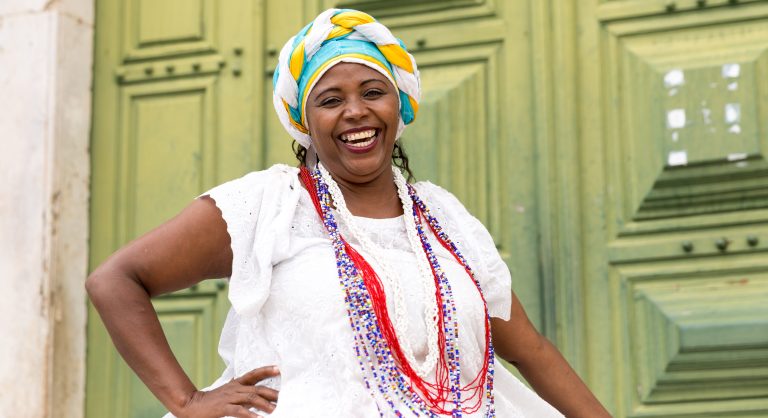
Smiling Bahian woman
Day 2
Salvador de Bahia
After a generous breakfast at the hotel buffet, meet your private guide at reception for a morning walking tour of the historic Upper City.
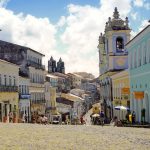
For approximately 3 hours, you will explore the famous Pelourinho district, the beautifully preserved and maintained historic center of Brazil’s first capital. Much of Salvador’s rich architectural heritage is concentrated here, spanning from the earliest days of colonization in the 16th century to the beginning of the 20th century.
Between brightly painted Baroque buildings now home to small shops and pristine churches with richly gilded interiors, the splendor of centuries past unfolds before your eyes.
At the end of the tour, you can enjoy lunch at one of the many restaurants serving traditional Bahian cuisine in Pelourinho, following your guide’s recommendations. (Meal not included.)
Considered one of Brazil’s finest regional cuisines, Bahian food is strongly influenced by African traditions, both in its preparation and ingredients. One of its most characteristic ingredients is dendê, traditional palm oil with a distinctive flavor and vivid orange hue, found in delicious Bahian dishes such as moqueca.
After exploring the historic center during the morning, the afternoon will be devoted to a panoramic tour of Salvador, taking you to some of the city’s other major landmarks in different neighborhoods.
After heading down to the Lower City aboard the famous public Lacerda Elevator with your private guide, you will stop at the Mercado Modelo, a small market where you can discover local handicrafts.
You will then meet your driver, who will take you by private vehicle to the next stop on your tour.
You will head to the Itapagipe Peninsula to admire the scenery before visiting the Church of Bonfim, one of the most important centers of Bahian Christianity, famous for its colorful ribbons, known as fitas, and its ex-votos.
You will then return toward Salvador’s Atlantic coast to visit the Fort of Mont Serrat, one of the city’s most striking examples of Brazilian military architecture. From the top of this hill overlooking the ocean, you can admire downtown Salvador, the coastline and the Atlantic.
Finally, continue toward Dique do Tororó, an artificial lake set between two hills in Salvador and surrounded by green spaces. Its most distinctive feature is the group of 8 giant statues representing the main Orixás standing in the middle of the lake.
Each of these striking figures has its own color and symbolic attributes. They represent deities of Candomblé, the most widespread Afro-Brazilian syncretic religion, whose spiritual heart is Salvador de Bahia.
At the end of the afternoon, your driver and guide will take you back to your hotel.
Overnight at the hotel.
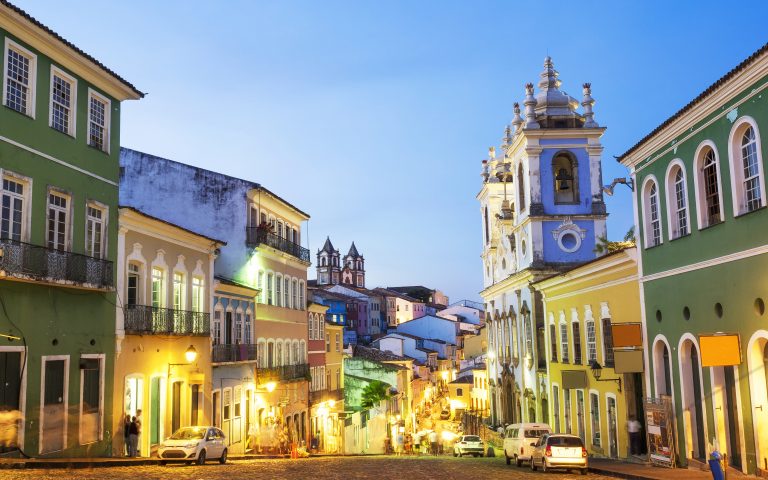
Pelourinho Square at nightfall
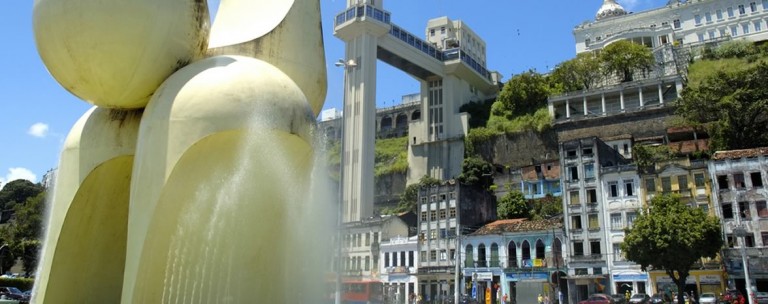
Lacerda Elevator in Salvador de Bahia
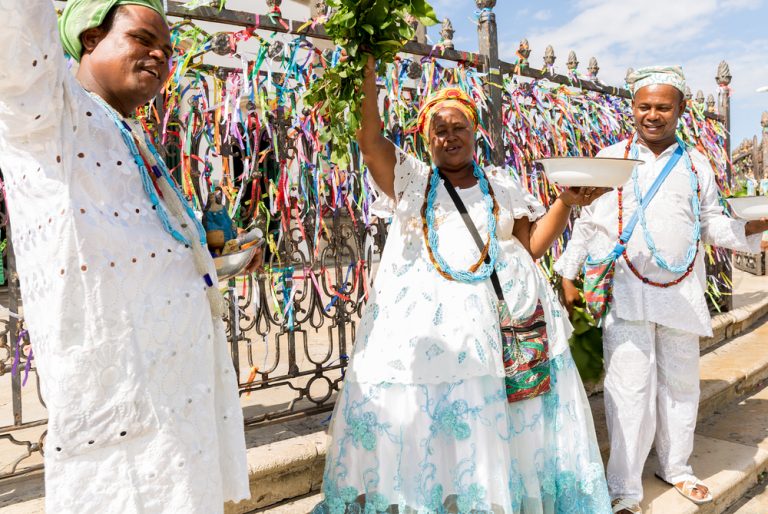
Bahian women in traditional dress in front of the gates of the Church of Bonfim.
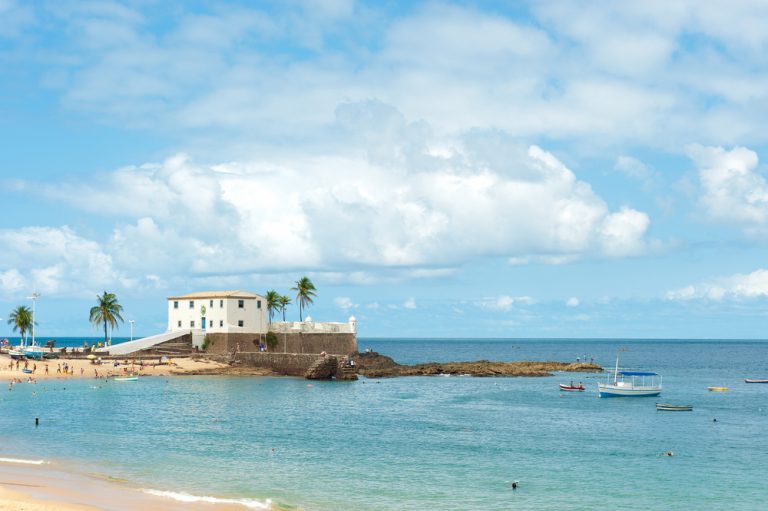
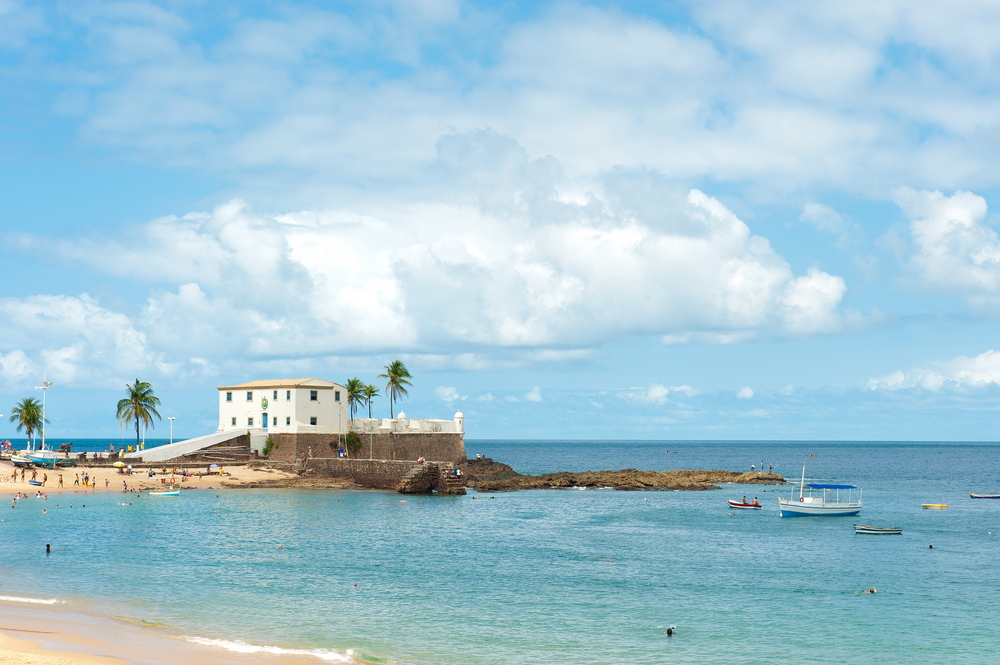
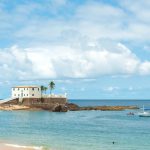
Barra Fort
Day 3
Salvador de Bahia – Cachoeira
Breakfast at the hotel buffet.
Meet your guide and driver for a full-day immersive excursion into the Recôncavo, the countryside surrounding Bahia’s capital. During this enjoyable journey, you will have the opportunity to discover everyday Bahian life and visit the small colonial town of Cachoeira.
Located on the banks of a river at the far end of the vast Bay of All Saints, Cachoeira enjoyed a prosperous era thanks to the fertility of its land, lasting until the beginning of the 20th century, when the sugarcane and tobacco trades were especially lucrative. This period of prosperity brought together a highly diverse population. On one side were settlers arriving from across Europe in search of opportunity. On the other were enslaved Africans forcibly brought to work in the fields. Over time, this coexistence gave rise to a deeply mixed culture that is distinctly Bahian. As you wander through the historic center of the small country town of Cachoeira, among colonial buildings and old churches, you can soak up the relaxed and welcoming atmosphere created by its residents.
During this pleasant excursion focused on discovering the local way of life, you will visit a traditional market filled with colors, aromas and mouthwatering flavors.
Lunch is included and will be served at a farm with its own restaurant. It is a wonderful opportunity to awaken your taste buds with flavorful regional dishes prepared using local ingredients.
After lunch, take a walking tour through the streets of Cachoeira to admire its rich colonial architecture.
Finally, before heading back, you will visit a traditional cigar-rolling workshop. Rolled entirely by hand and exclusively by women, these cigars have made the region famous among enthusiasts around the world.
On the return journey, you will travel through the picturesque landscapes of vegetable plantations that supply Salvador’s markets. It is a wonderful way to observe the peaceful rural lifestyle of Bahia.
Overnight at the hotel.
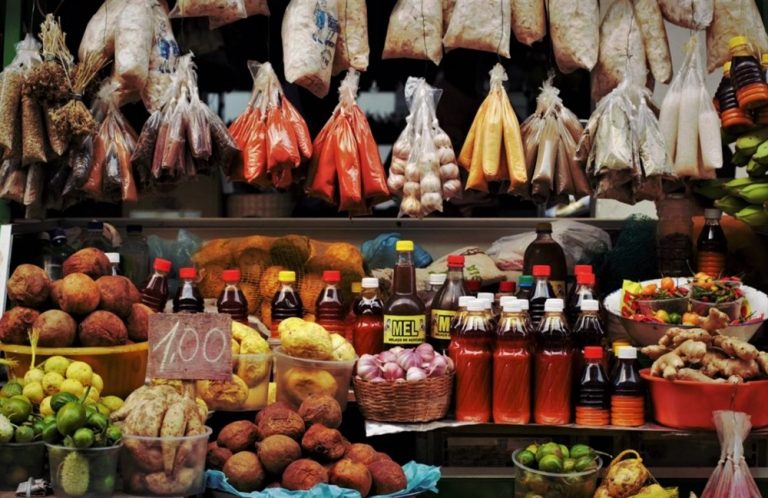
Vegetables and spices at a market in Bahia
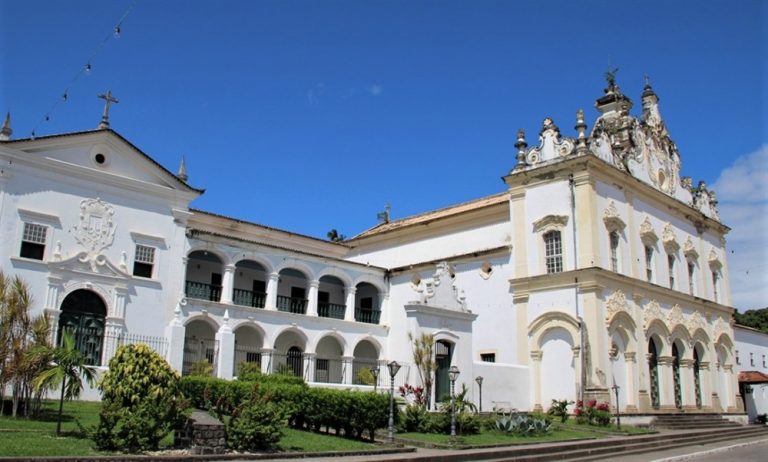
Church of Carmo in Cachoeira.
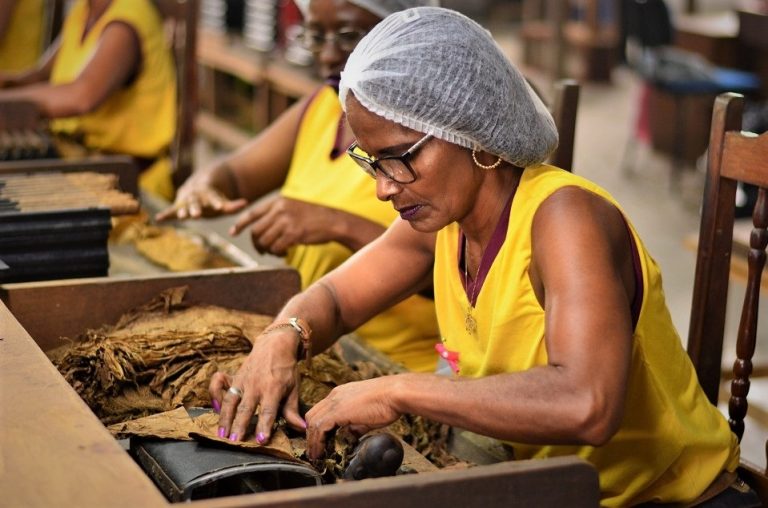
Traditional cigar workshop in Cachoeira
Day 4
Salvador de Bahia
In the morning, meet your private guide, who will be at your disposal for 4 hours to visit several museums located in the historic center.
The UFBA Museum of Archaeology and Ethnology (MAE) is fascinating, with extensive collections devoted to the region’s Indigenous peoples.
The Afro-Brazilian Museum (MAFRO) traces the history of the Afro-Brazilian community and its syncretic beliefs. It is undoubtedly one of the best places to understand the history of Salvador de Bahia’s Black community and its culture, which blends African roots with Christianity.
The Casa do Benin notably houses more than 200 African sculptures from the collections of ethnologist Pierre Verger, one of the foremost specialists in Afro-Brazilian culture.
The Museu da Misericórdia, housed in a beautifully preserved former palace, contains more than 3,000 historic objects, including what is said to be Brazil’s oldest automobile on display, as well as numerous colonial artifacts.
To finish, stop by the Casa do Olodum to pick up a souvenir. This is the birthplace of the famous percussion group which, in addition to running social programs for Afro-Brazilians, helped popularize batucada ensembles around the world through collaborations with Michael Jackson, Jimmy Cliff and Paul Simon.
Afternoon at leisure.
This is the perfect opportunity to enjoy the hotel facilities, such as the swimming pool, during the hottest part of the afternoon.
You can also return to explore other museums or take a taxi to enjoy Salvador’s coastline and its many beaches.
Barra Beach is the closest, but you can also cross the bay aboard one of the regular ferries to discover quieter beaches on charming Itaparica Island. Another option is to head to the lively beaches popular with locals in the Itapuã area.
Overnight at the hotel.
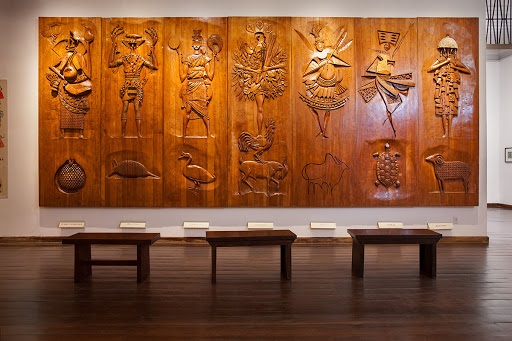
Caribé at the Afro-Brazilian Museum in Salvador de Bahia.
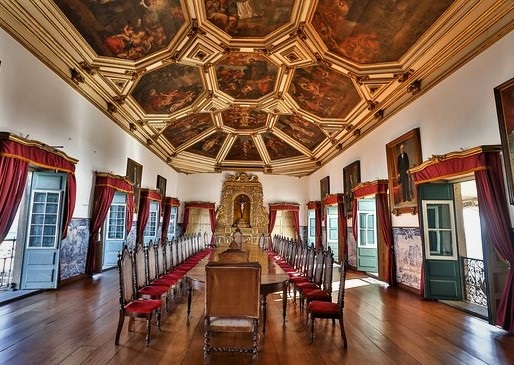
Museu da Misericórdia in Salvador de Bahia.
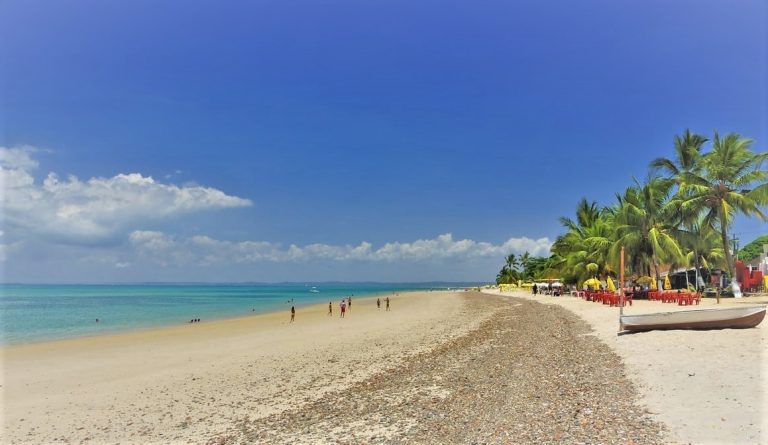
Beach on Itaparica Island
Day 5
Salvador de Bahia Out
Tropical fruit juices, cakes, savory and sweet local specialties such as tapioca pancakes await you for one last Bahian breakfast at the hotel restaurant.
Morning at leisure.
Check-out at noon.
If necessary, you can leave your luggage at reception while waiting for your transfer and take the opportunity to enjoy one final stroll through Pelourinho and soak up its unique atmosphere.
It is another chance to admire capoeira performers, combining dance and local martial arts as they whirl through the air to the sound of the berimbau and traditional singing, surrounded by a circle of fellow performers dressed in white.
And do not miss the welcoming Bahian women, easily recognized by their traditional turbans and lace petticoats.
One last stop at one of their stands selling delicious acarajé and other typical snacks around the squares is the perfect way to leave with even more wonderful memories of the city once known as the “Black Rome.”
Depending on your flight schedule, a driver will pick you up and take you to the airport.
Upon arrival at the airport, end of our services.
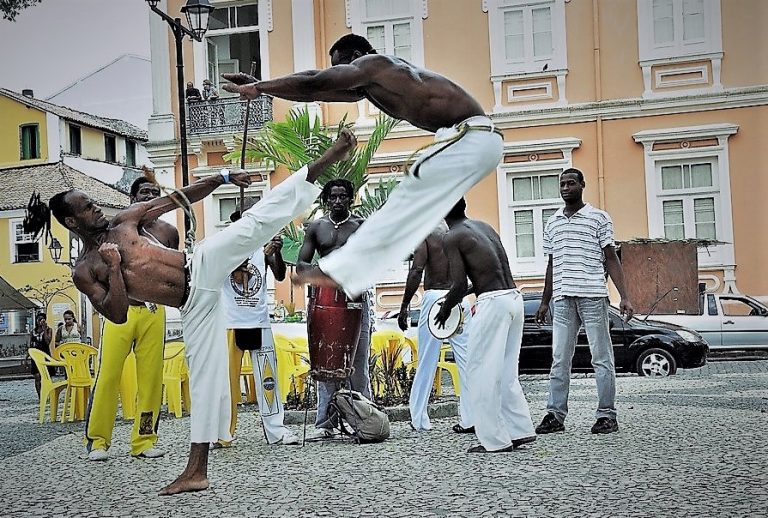
Capoeira in a square in Pelourinho, Salvador de Bahia.
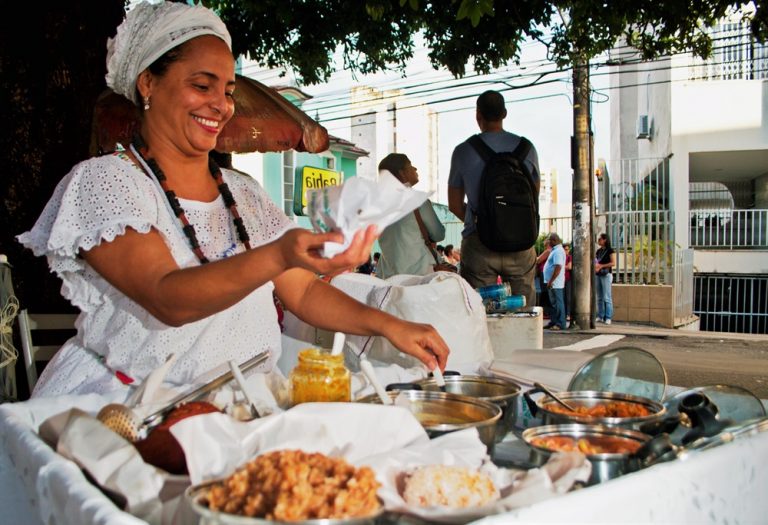
Acarajé vendor in a square in Salvador de Bahia.
Accommodation
Salvador de Bahia
Salvador de Bahia
Monte Pascoal (Standard)
Ideally located across from the famous Porto da Barra Bay in Salvador de Bahia, Monte Pascoal Hotel is an exceptional base for enjoying the sunshine and admiring one of the city’s most spectacular sunsets.
This welcoming hotel offers spacious rooms equipped with all the amenities needed for a comfortable stay, several of them featuring magnificent ocean views.
Guests can enjoy a rooftop outdoor swimming pool, a restaurant serving a varied selection of dishes and warm, attentive service.
It is an excellent choice for combining relaxing moments by the sea with exploring Salvador’s rich historical and cultural heritage.
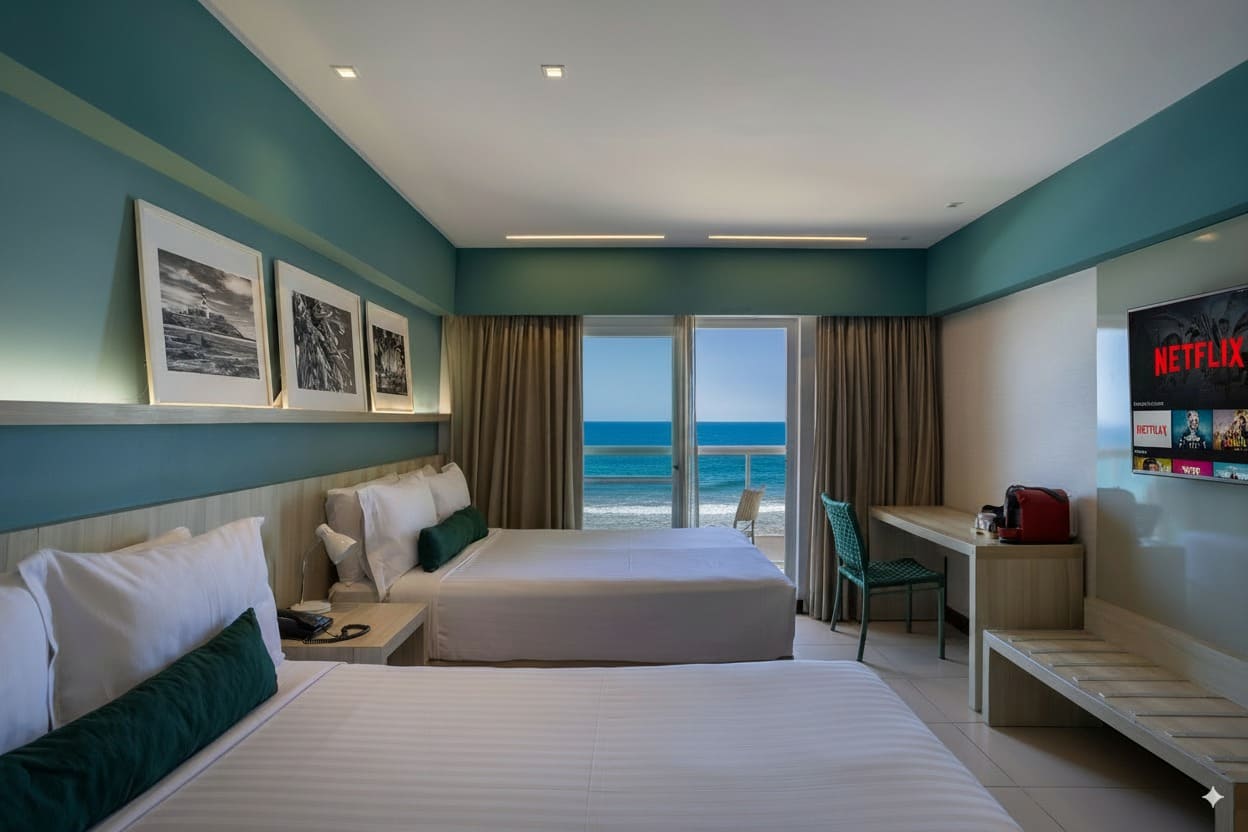
Salvador de Bahia
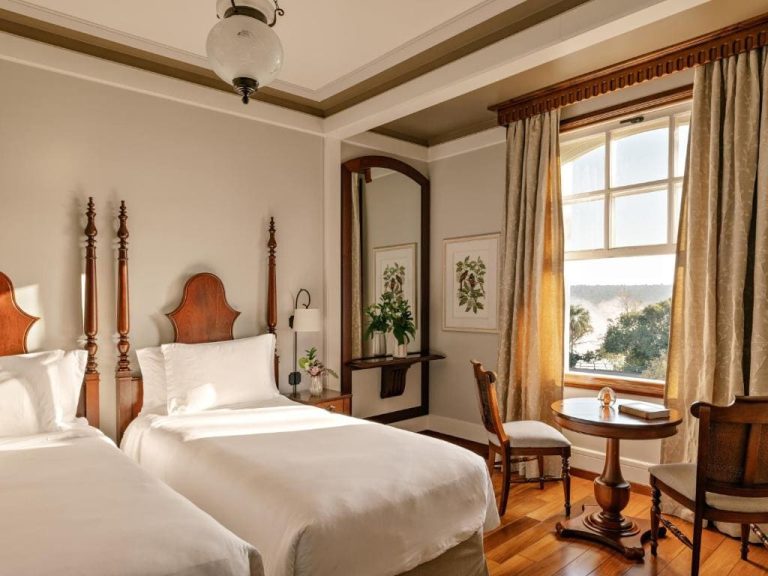
Fera Palace Hotel (Superior)
This iconic Salvador hotel immediately charms guests with its refinement and unique character.
Set within a fully restored heritage building dating from the 1930s, the hotel offers comfortable accommodations with elegant Art Deco-inspired design.
Its greatest highlight is the rooftop terrace, where an infinity pool and lounge area provide an exclusive setting with outstanding views over the Bay of All Saints.
Ideally located just steps from the historic district, Fera Palace is an excellent base for exploring the lively streets of Pelourinho on foot.

Also discover our tours in this region
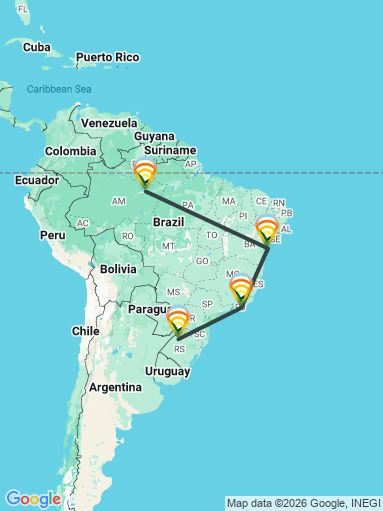
11 nights – The 4 must-see highlights of Brazil
The majestic Iguazu Falls, set within an ultra-exclusive enclave — Rio de Janeiro, a magical destination blending prestige with iconic vistas — Salvador de Bahia, the captivating soul of Brazil, elevated by its exceptional heritage — The Amazon rainforest, experienced through a refined, private sanctuary
From
8710
€
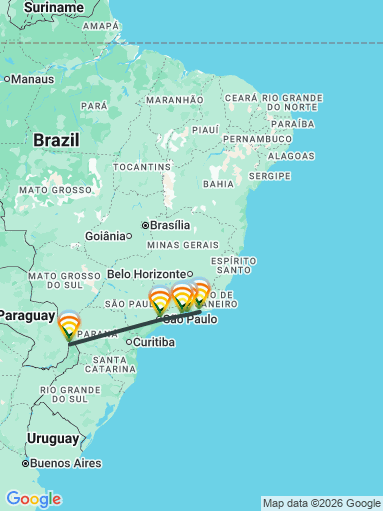
15-Day Tour: The South – Not to Be Missed
The magnificent Iguazu Falls – The Atlantic Forest of the Green Coast – Rio de Janeiro, the “Marvelous City” – Salvador de Bahia, the Afro-Brazilian Rome.
From
4230
€
11 nights – The 4 must-see highlights of Brazil
The magnificent Iguazu Falls – Rio de Janeiro, the “Magic City” – Salvador de Bahia, the soul of Brazil – The legendary Amazon rainforest
From
2480
€
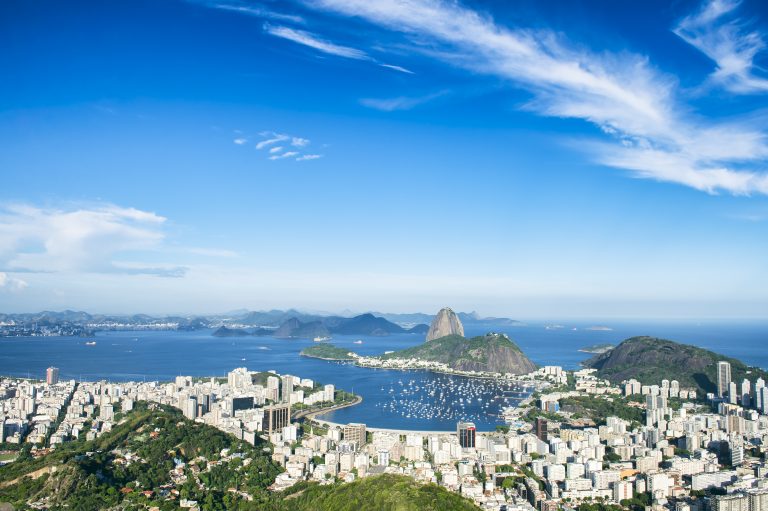
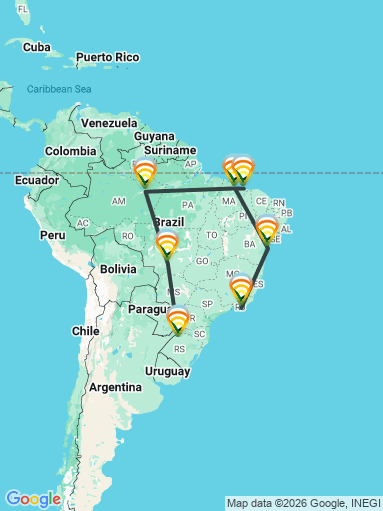
22 days, including 3 nights in Rio de Janeiro
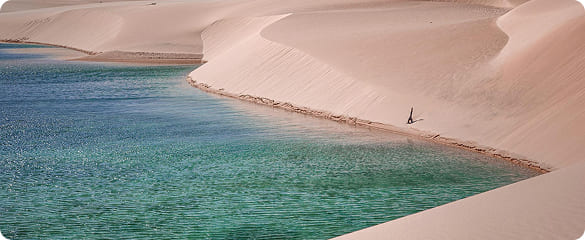
Iguassu Falls • Pantanal • Porto Jofre • Amazon Rainforest • Lençóis Maranhenses • Salvador • Rio de Janeiro
From
8470
€
Discover our travel offers
Since
2003
pioneers in luxury travel in Brazil
Based in
Fortaleza
in the heart of Brazil, close to our partners
French-speaking
specialists
a team dedicated to your trip
Thousands of
travelers…
have already traveled with Brazil Selection. Will you be next?